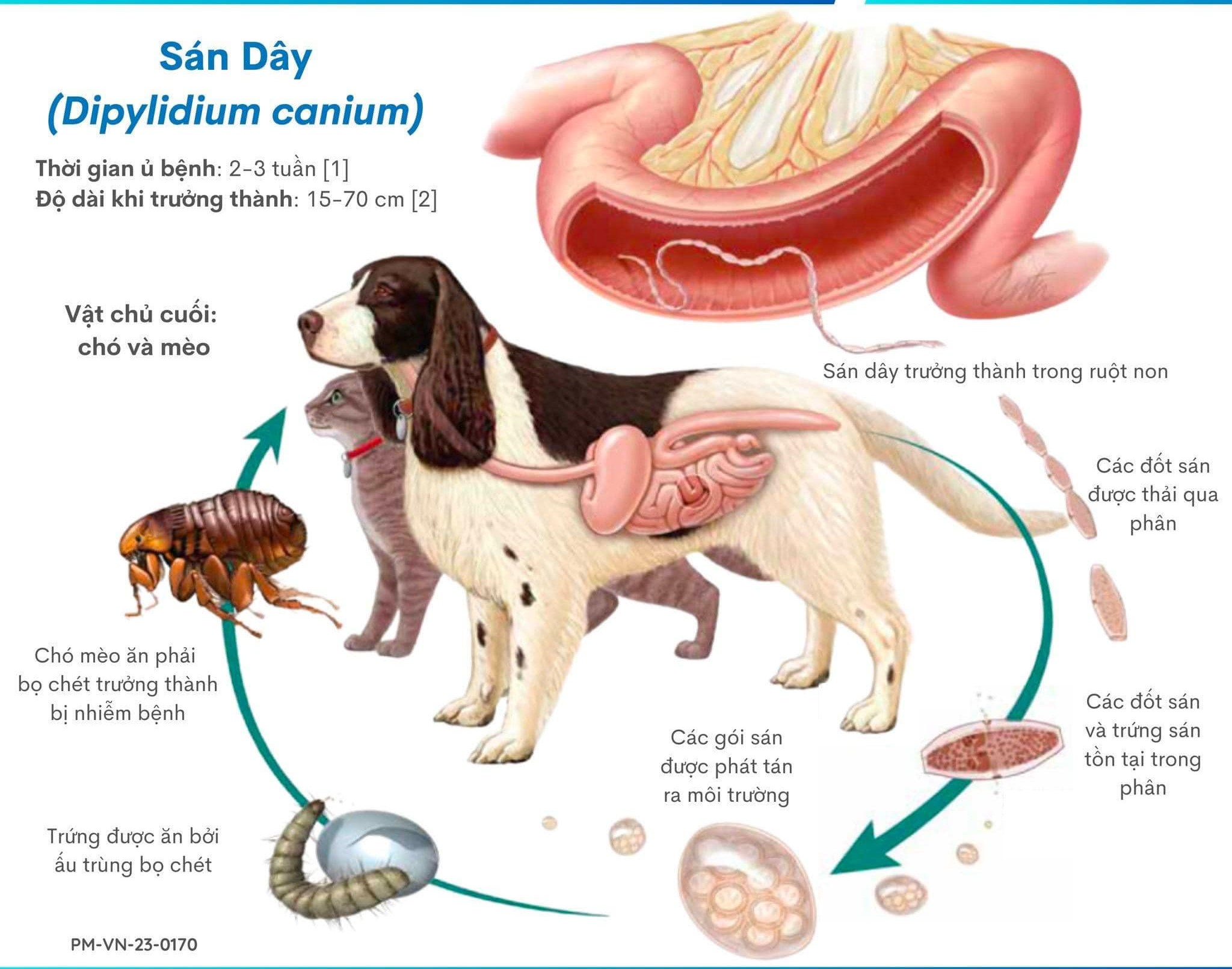
Intestinal Parasites: Worms & Tapeworms
When dogs or cats 'scoot' their bottoms across the floor to relieve itching, it is often a classic sign of a Dipylidium caninum (tapeworm) infection 😨
Dipylidium caninum commonly known as the dog tapeworm, is a frequent intestinal parasite found in dogs. It can also readily infect cats and, in some cases, be transmitted to humans.
* Hosts: Domestic dogs, cats, and wild canids
* Habitat within the Host: Small intestine
* Distribution: Worldwide
* Transmission Route: Ingestion of infected fleas (the intermediate host)
Symptoms: Tapeworm infections in dogs and cats are frequently asymptomatic (showing no symptoms). However, as mature, egg-filled tapeworm segments (proglottids) pass through the rectum, they cause intense irritation. This prompts pets to "scoot" their bottoms across the ground to relieve the itching. In severe cases, heavy infestations can lead to enteritis (intestinal inflammation) and/or bowel obstruction, which can be fatal if left untreated.
In humans (especially children), Infection can cause anal pruritus (itching) and mild gastrointestinal disturbances.
Diagnosis: based on the pet's medical history (history of flea exposure) or through the physical detection of tapeworm segments (proglottids) in the feces, on the fur, around the bedding, or near the perianal area. Dipylidium caninum segments can be distinguished from Taenia spp. segments by their characteristic cucumber-seed shape and the presence of two symmetrical genital pores located on each side of the segment. Occasionally, egg packets released from disrupted segments can be identified using standard fecal flotation techniques.